
Concrete Driveway Installation in
Warrensville Heights
Warrensville Heights Concrete Solutions installs and replaces concrete driveways for homeowners throughout Warrensville Heights and the surrounding area, delivering durable results that hold up year after year.
20+
Years Serving Warrensville Heights
450+
Concrete Jobs Done
4.9/5
Average Customer Rating
More Than Just Concrete: What Makes a Driveway Last
A concrete driveway is one of the most heavily used surfaces on your entire property, supporting the daily weight of vehicles, foot traffic, and exposure to the elements year round. Unlike a patio or sidewalk, a driveway has to perform under constant stress, repeated freeze and thaw cycles, exposure to oil and chemical drips, and the abrasive wear of tires turning across the surface day after day. Homeowners typically need a new driveway when their existing one is cracked, sunken, riddled with potholes, or simply worn beyond the point where patching makes financial sense. Others need one installed for the first time as part of a new home build, an addition, or a converted gravel or asphalt drive that's reached the end of its usable life.
A properly installed concrete driveway does more than just look better than the alternative. It improves your home's curb appeal and resale value, provides a smooth and reliable surface for vehicles and foot traffic alike, and when installed correctly with proper base preparation, adequate thickness, and quality materials, it can easily outlast asphalt by decades with far less ongoing maintenance.
How Do You Know It's Time for a New Driveway?
Most homeowners start considering driveway replacement when cracking becomes widespread rather than isolated, when sections have visibly sunken or shifted relative to one another, or when the surface has deteriorated to a point where patching no longer makes practical or financial sense. This is especially common with older driveways that were originally poured without adequate base compaction, proper slab thickness, or reinforcement, all of which were common shortcuts in decades past that lead to premature failure.
Waiting too long to address a failing driveway rarely makes the problem go away on its own, and in nearly every case it makes the eventual repair more extensive and expensive. Small cracks that seem cosmetic at first allow water to seep beneath the slab, and once that water freezes during winter, it expands and accelerates the damage every single season. Uneven sections create real trip hazards for anyone walking to your door, and repeatedly driving over an uneven or pitted surface can damage tires, alignment, and suspension components on your vehicle over time. A driveway that's allowed to deteriorate past a certain point eventually requires full excavation and replacement rather than the more affordable section repair that might have solved the problem years earlier.
How We Install Your New Driveway, Step by Step
We begin every driveway project with a thorough excavation of the existing surface and the soil underneath, removing old concrete, asphalt, or gravel along with any unstable or organic material that could compromise the new slab. From there, we install a properly compacted gravel base, typically several inches deep depending on soil conditions and local frost depth requirements, since this step is genuinely one of the most important factors determining how long your new driveway will hold up. A weak or improperly compacted base is the root cause of the majority of driveway failures we see, regardless of how good the concrete itself is.
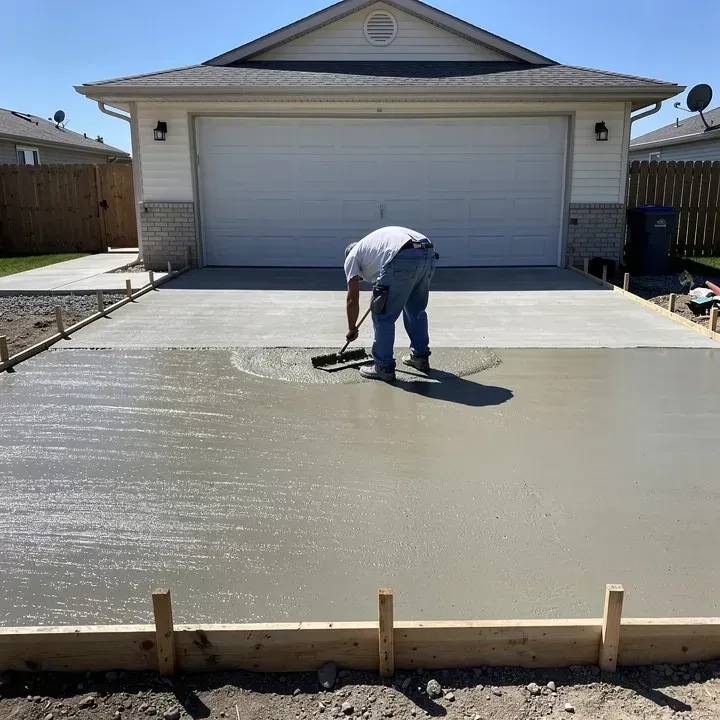
Once the base is set, we form the edges precisely to your desired layout, install steel reinforcement or wire mesh where the project calls for it, and pour the concrete in a single, properly timed application to avoid weak seams or cold joints that can become future crack points. After pouring, we finish the surface with a broom texture for slip resistance, cut control joints at calculated intervals to manage natural cracking in a controlled, predictable way rather than randomly across the slab, and allow the concrete a full curing period before the driveway is opened up to vehicle traffic.
UndWhy Driveway Prices Vary and What You're Paying For
Several factors influence the overall cost of a concrete driveway project, and understanding them helps homeowners know what to expect before requesting an estimate. Total square footage is the most obvious factor, but slab thickness and the level of reinforcement specified also play a significant role, since a driveway that needs to support heavier vehicles or a wider footprint requires more material and labor. The existing condition of the soil and base matters just as much. Driveways that require significant excavation, soil correction, or drainage adjustments due to grading issues or poor existing conditions will cost more than a straightforward replacement poured on stable, well-draining ground.
Beyond the structural factors, finish choices affect pricing as well. A standard broom finish is the most cost effective option, while decorative finishes like stamped patterns, exposed aggregate, or color additives add both material and labor costs but can significantly enhance curb appeal. Access to the work site, the need for removal and hauling of old material, and any necessary permitting also factor into the final number. We walk through every one of these variables with you during your estimate and provide a detailed, itemized breakdown so you understand exactly what's driving the cost of your specific project.
Frequently Asked Questions
How long will my new driveway take to cure before I can park on it?
Some surface cracking is actually a normal and expected part of how concrete behaves over time, even with a properly executed installation, since concrete naturally expands and contracts as temperatures shift throughout the year. We account for this during installation by cutting control joints at carefully calculated intervals across the slab, which gives the concrete predetermined, intentional points to crack along rather than developing random, unsightly cracks across the visible surface. A properly installed driveway with adequate reinforcement, correct slab thickness, and a well compacted base should only experience minor, manageable cracking along those control joints over many years, rather than the kind of significant structural cracking that signals an underlying problem.
Do I need a permit for a new driveway?
Driveway replacement or new installation often requires a permit from the local building department, particularly when the project involves changing the size, footprint, or drainage pattern of the existing driveway, or when it ties into work being done on a garage or other structure. Requirements can vary depending on your specific property, lot size, and whether any zoning setbacks apply. We're familiar with the local permitting process here in the area and will confirm during your estimate whether your specific project requires one. When a permit is needed, we're happy to handle that process on your behalf so you don't have to navigate the paperwork or scheduling yourself.
Can you pour a new driveway over my old one instead of removing it?
In most cases, we don't recommend pouring directly over an existing driveway, even though it might seem like a faster and cheaper option upfront. Layering new concrete over old creates a seam where moisture can become trapped between the two layers, and that trapped moisture combined with Ohio's freeze thaw cycles often leads to premature cracking, delamination, or failure of the new surface well before its expected lifespan. Removing the old concrete entirely allows us to properly inspect the condition of the soil and base underneath, correct any drainage issues that may have contributed to the original driveway's failure, and ensure your new driveway is built on a genuinely solid, stable foundation rather than stacked on top of a potentially compromised one.
How long will my new driveway take to cure before I can park on it?
Most concrete driveways can handle light foot traffic within 24 to 48 hours after the pour, but it's important to wait at least seven days before driving vehicles on the new surface, since the concrete needs that time to develop enough compressive strength to handle the weight without surface damage. While the slab reaches the majority of its strength within that first week, concrete actually continues curing and gaining strength gradually for about 28 days total. Because of that, we recommend avoiding heavy or prolonged loads like RVs, trailers, or extended parking of multiple vehicles in one spot until that full curing window has passed, just to give the slab the best possible start.
Let's Talk About Your Concrete Project
If you've been putting off dealing with a cracked driveway, sunken sidewalk, or aging patio, now is a great time to get it taken care of. Reach out today for a free, no obligation estimate, and we'll walk you through your options honestly so you can make the right decision for your home and your budget. Call us, and let's get your concrete project started.


Contact
(216) 220-8148
Mon–Sat: 7am–7pm
Warrensville Heights, OH
About Us
Warrensville Heights Concrete Solutions is a locally owned and operated concrete contractor with over 20+ years of experience serving homeowners throughout Warrensville Heights and the surrounding Cleveland area. We're committed to honest pricing, quality craftsmanship, and concrete work built to handle everything Northeast Ohio weather can bring. We proudly serve homeowners across the wider region, not just within city limits.
© Copyright 2026 Warrensville Heights Concrete Solutions. All rights reserved.
© Copyright 2026 Warrensville Heights Concrete Solutions.
All rights reserved.